
by Sanman Thapa | June 5, 2026
The gardener does not make things grow. The gardener creates the conditions in which growth becomes possible.
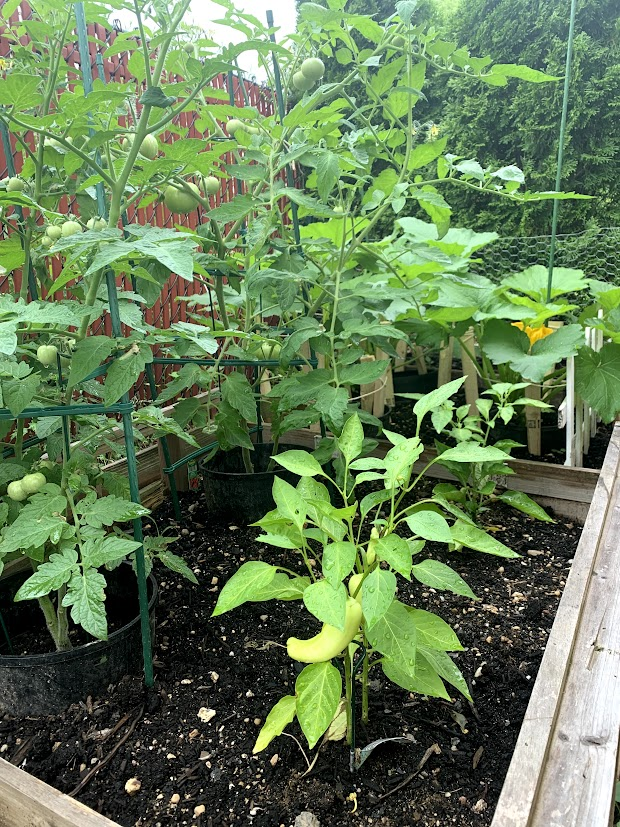
Different plants grow at different rates, yet all respond to the same care.
This morning, I was outside tending my vegetable plants while my wife and son were getting ready to leave for school. As they walked toward the car, I offered a cheerful “Good morning.” My son responded with the kind of brief acknowledgment familiar to many parents of teenagers. Under ordinary circumstances, I would have laughed and gone about my day. Yet the exchange lingered with me because it followed a disagreement we had the day before, one that stayed with me long after it ended.
The disagreement itself was not what occupied my attention. Conflict is a natural part of any close relationship, particularly between parents and adolescents. What remained with me was a question I had not anticipated: Why had the exchange affected me so deeply? As I reflected on it, I realized that my reaction had less to do with the specific words spoken and more to do with what those words revealed about me. Beneath my frustration was a desire for reassurance. I wanted confirmation that I was still important in my son’s life, even as he continued the developmental work of becoming his own person. The realization was uncomfortable because it exposed a truth I had not fully acknowledged. Part of me still longed for the certainty that comes with being needed, even though growth often requires moving beyond that dependence.
As I watered the plants, I found myself observing them more carefully than usual. Some were flourishing, while others appeared to be struggling. A few had grown in directions I had not anticipated. Standing there, I was reminded of a simple truth that every gardener eventually learns: growth cannot be forced. No amount of impatience will cause a plant to mature more quickly. Tugging at a stem does not help it grow taller; it merely risks damaging the very thing one hopes to nurture. The gardener’s responsibility is not to control growth but to create the conditions in which growth can occur.
The longer I considered this idea, the more I recognized its relevance beyond gardening. Parenting often presents the same temptation. We invest years of energy, care, sacrifice, and attention into our children. We guide, advise, encourage, and protect. Then, often without noticing, the relationship begins to change. Children become adolescents. Their world expands beyond the family. Their opinions become their own. They begin testing ideas, questioning assumptions, and seeking greater independence. Although these developments are signs of healthy growth, they can be difficult for parents to experience. It is easy to mistake a teenager’s need for autonomy for rejection or to interpret temporary distance as evidence of a weakening bond.
What struck me most that morning was the realization that this lesson extends far beyond parenting. Throughout my life, I have repeatedly encountered circumstances over which I had little or no control. I could not control the droughts that contributed to my family’s move from Panchthar to Jhapa. I could not control the factory conditions that shaped my years in Kathmandu. I could not control the accident that altered the course of my life. Nor could I control economic conditions, immigration policies, workplace politics, or the decisions made by others. As a counselor, I cannot control whether students embrace the opportunities placed before them. As a son, I cannot control the realities of aging. As a father, I cannot determine who my child will ultimately become.
Yet when I look back across these experiences, I notice a consistent pattern. Although I could not control outcomes, I could choose how I responded to them. I could show up. I could offer support. I could remain present. I could continue caring even when the results were uncertain. In retrospect, much of my life has involved learning the difference between responsibility and control. Responsibility asks us to engage, to care, and to contribute. Control seeks certainty about outcomes that are often beyond our reach. One is both necessary and possible; the other is frequently an illusion.
Perhaps that is why the disagreement stayed with me. It exposed my lingering desire for certainty in a relationship that is naturally evolving. It reminded me that love does not guarantee influence and that influence does not guarantee outcomes. We can offer guidance without being able to determine whether it will be followed. We can care deeply about another person without being able to shape their choices. Relationships, like gardens, do not flourish because they are controlled. They flourish because they are tended. They require attention, patience, consistency, and trust, particularly during seasons when growth is not immediately visible.
As I finished watering the plants that morning, nothing about the situation had fundamentally changed. The disagreement had not disappeared, and no profound reconciliation had taken place. What had changed was my perspective. I was reminded that my responsibility is not to determine the outcome of another person’s journey. My responsibility is to tend to the relationships, responsibilities, and opportunities entrusted to me while I have the chance.
The plants would continue growing at their own pace. My son would continue growing on his own. Neither would be helped by my impatience.
Growth, whether in a garden or in a human life, often occurs long before it becomes visible. Sometimes the wisest response is not to exert more control, but to continue tending with patience and faith that something important is happening beneath the surface.


Leave a Reply