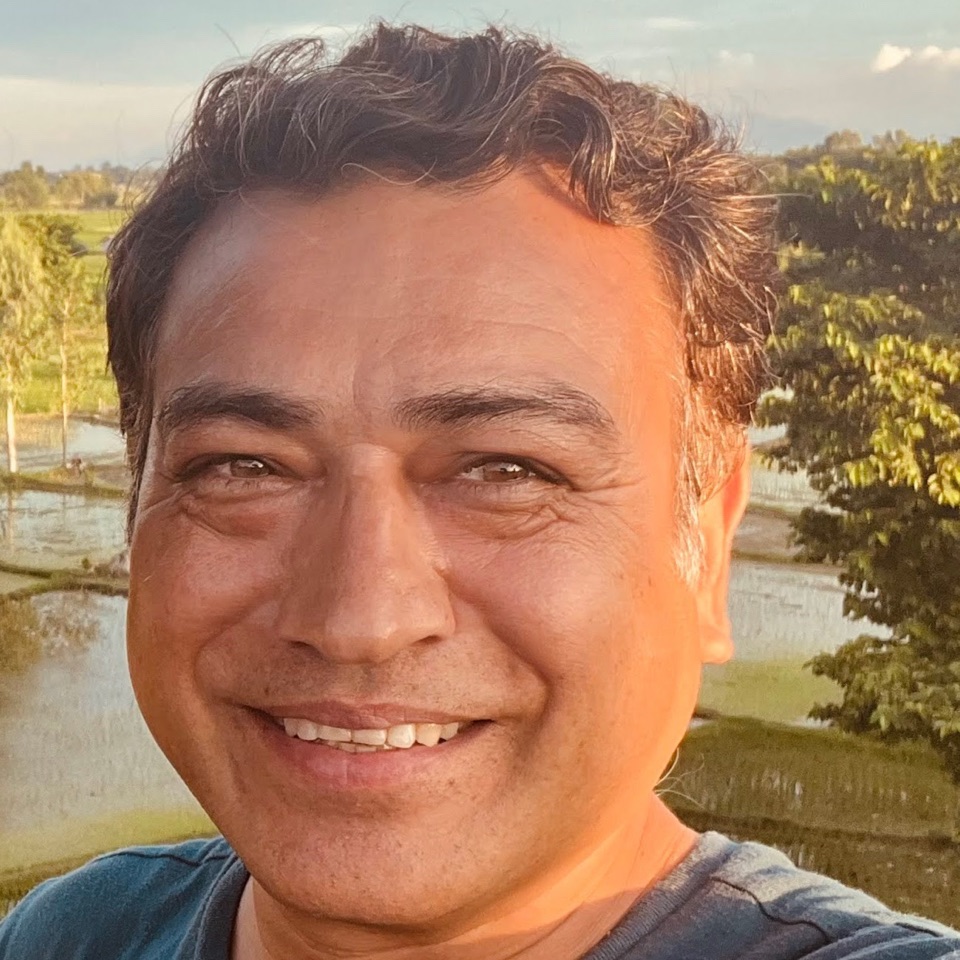
By Sanman Thapa | 5-29-2025 | 10:00 am
When colleagues started whispering “Happy Birthday” as I walked down the hallway, I was confused. I smiled awkwardly and asked, “Whose birthday?” One of them chuckled and said, “Cat’s out of the bag.” I tried to play it off—“I don’t really like celebrating my birthday,” I protested. But it was too late. The word had spread.

When I finally checked my email, there it was—an all-staff message from my supervisor with the subject line bursting with enthusiasm:
“Happppyyyyyyyyy Birthdayyyyyyyyyyyyyyyyy Sanman!!!”
By noon, my inbox was flooded with kind messages and well wishes. And when I stepped into the office, my supervisor began singing Happy Birthday out loud. I was flustered, unsure how to respond.
The truth is, I’ve never been big on celebrating my birthday. Growing up in Nepal, we didn’t make much of it. It wasn’t a tradition in our household or culture at the time. Maybe that’s changed now, with the internet and social media bringing Western customs to every corner of the world. But for me, birthdays still feel foreign—like something I’m observing rather than participating in.
Sensing my discomfort, my supervisor said something that made me pause:
“You should celebrate your birthday—it’s a blessing to make it another year.”
Then she added, gently, “I’ve been to more funerals than birthdays. That’s why I make a big deal out of celebrating life. But I’m sorry if I made you uncomfortable.”
That one line stayed with me. I work in an alternative transfer school that serves students who are under-credited and overaged—young people who didn’t make it through traditional high school pathways. Many have been entangled with the criminal justice system. Some have spent more time in jail than in school. Others have been caught up in gang violence or simply left behind by systems that failed to see their potential. Most come from low-income, marginalized backgrounds.
Her comment reminded me of something I’ve often seen but rarely paused to name: that for many Black boys and young men in America, even reaching the age of 25 is not guaranteed. The statistics are staggering. According to the CDC, homicide is the leading cause of death for Black males aged 15–34. They’re nearly 10 times more likely to be killed by police than white men. And per The Sentencing Project, 1 in 3 Black boys born in 2001 can expect to be incarcerated during their lifetime.
Then there’s the emotional toll. Systemic racism, poverty, trauma, and lack of access to mental health care mean many of these young men carry burdens that are invisible until they break them. Many don’t talk about it. Some never get the chance.
So when my supervisor said, “I’ve been to more funerals than birthdays,” she wasn’t just talking about optimism or tradition. She was talking about survival. About resilience. About the need to mark moments of joy in a world where joy is not promised.
Suddenly, the idea of celebrating my birthday didn’t feel so awkward. It felt earned.
Still, I had another reason for hesitating, one I didn’t mention aloud. You see, my legal birthday is listed as May 28th, but I’ve always considered July 25th my actual birthday. It’s a long, complicated story tied to paperwork, migration, and mismatched records. And I’ve learned that explaining it to people can be exhausting. So instead of going into all that, I just smiled and said, “Thank you.”
And maybe that’s enough. Maybe accepting love and celebration, even when it feels unfamiliar, is its own kind of growth.
As the messages poured in, I found myself quietly reflecting not just on the day, but on the weight of reaching fifty.
Fifty.
Half a century of living, surviving, stumbling, rising again. I’ve lived through a civil uprising in Nepal, factory floors that nearly took my life and it did take my hand, nights spent hungry, and mornings with nothing but hope and hot chai to carry me forward. I’ve crossed oceans, rebuilt a life from scratch in a country that didn’t always feel like mine, learned a new language of belonging, became a father, and carved out a role not just for myself, but for others too—as a school counselor, as a writer, as a witness.
Reaching fifty isn’t just a number. It’s a reckoning. A reminder of what’s been gained: wisdom, resilience, and the ability to forgive both myself and others. But also what’s been lost along the way: childhood innocence, a homeland that now feels both close and far, the physical parts of me I had to learn to live without, and some relationships that never made it across the years.
And yet, here I am.
Not just alive, but living. Not just working, but doing work that means something. Not just parenting, but learning from my child every day what love without conditions looks like.
Sometimes, I still feel caught between two worlds: between who I was and who I’ve become, between the young boy who left Jhapa and the one now navigating the streets of New York. But turning fifty has brought something quiet and profound: a sense that maybe the point of life isn’t to fully arrive, but to continue showing up with openness, humility, and a willingness to try again.
So yes, this birthday felt strange. But it also felt sacred.
Because in a world that takes so many too soon through violence, neglect, poverty, or silence, reaching this age is not just a milestone. It’s a blessing. It’s a defiance. It’s a soft declaration that despite it all, I’m still here.
And for that, I am deeply, unspeakably grateful.
###
 Sanman Thapa
Leave a comment