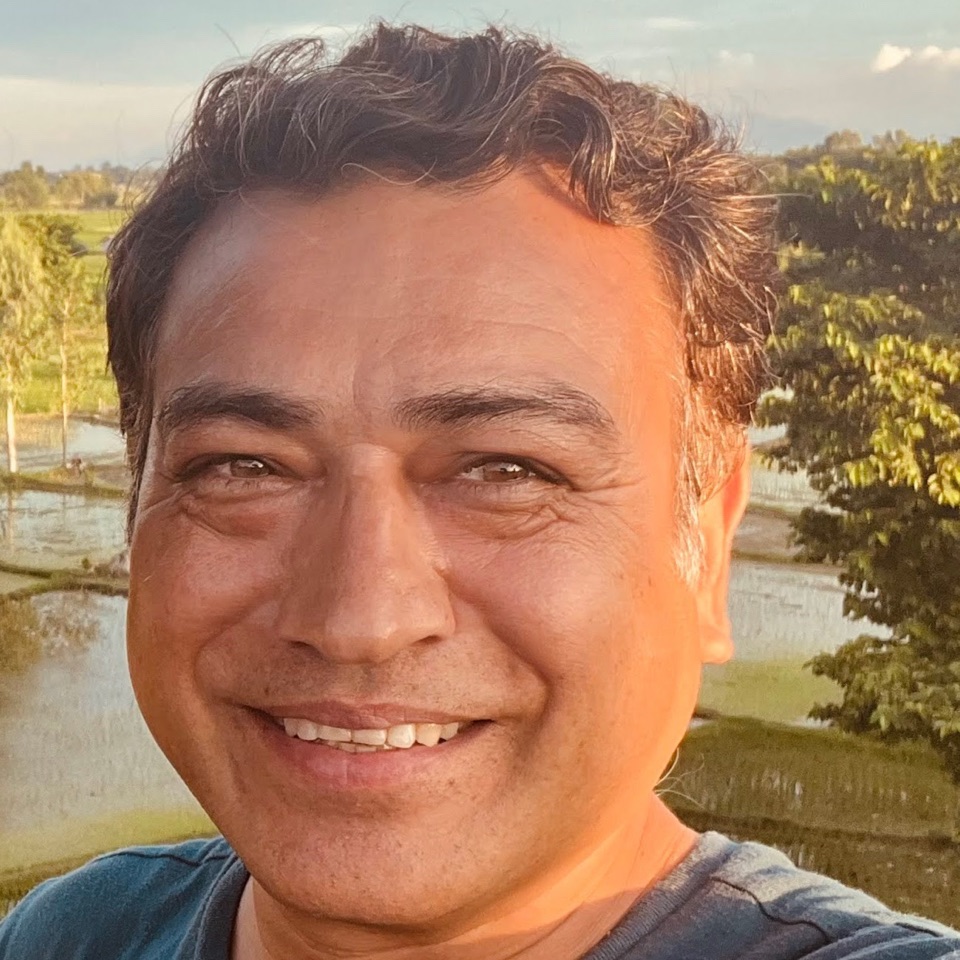
By Sanman Thapa |11-10-2024|10:15am
On the 5:27 p.m. Long Island Railroad train, I idly opened Facebook, expecting a quick scroll. Suddenly, I was jolted out of my routine as my screen filled with a haunting post: “Heartfelt condolences! Our heart is broken, our family is in shock, and once again, we say goodbye to our brother.” the date was 11/7/2024. The words blurred as my pulse raced. I tried to process this, scrolling through over 150 condolence messages, each hammering home a painful reality I wasn’t ready to face. Desperate for answers, I typed, “How? How did this happen to my childhood friend?”
In my memories, he was strong as an ox, a symbol of resilience and physical strength, someone who had once been deeply invested in bodybuilding. But here he was, lost to an unseen hand of fate, only 54, his last breath taken in a way that seemed as abrupt as it was final.
I frantically tried reaching out to family in Nepal, but it was early morning there. My messages went unanswered, calls didn’t connect, and when I finally reached a neighbor, they confirmed what I feared: after dinner one evening, my friend had stepped outside for fresh air, only to be found later in the yard, cold and lifeless.
They had rushed him to a hospital in Damak. By then, it was too late; he was pronounced dead upon arrival. His death unraveled a chain of sorrow. Only days earlier, he had returned to his village during the Dashain and Dipawali festivals, supposedly a time of celebration, to mourn the recent death of his youngest brother. This trip would prove to be his last.
Upon hearing the news, his wife rushed from Kathmandu, determined to bring his body back for cremation. His elder brother, who had arrived from Biratnagar in the dead of night, wanted the rites to take place near home. They argued, their grief sparking old resentments. His daughter, who had the strongest voice among them, spoke out, suggesting they perform the rites locally, near the home where her father had spent his youth. With the villagers rallying around her wishes, the family finally reached a reluctant consensus. Three hours of dispute later, his body was released from the hospital.
When I finally spoke to my father, he filled me in on how deeply fractured my friend’s family had become after their father’s passing. In just a short span, my friend had become the third of four brothers to face a sudden death. ‘Everyone’s suspicious of everyone,’ my father said, shaking his head at the heartbreaking chaos that surrounded my friend’s passing. The thought of his body lying cold and untouched while his family argued over it left me heartbroken. Why couldn’t they let him rest in peace?”
But my mind drifted from the unsettling end to the beginning, to our days growing up together. We hadn’t spoken in decades, yet every memory became clear. He was more than a friend; he was a protector, a confidant. He was five years older, and though I was a mere twelve-year-old, he took me under his wing, teaching me things that felt invaluable to my young self. He taught me how to do push-ups, crunches, and pull-up bar exercises. He would share exaggerated stories about girls in the village—fantasies more than facts, but I listened eagerly, enamored with his tales.
One night, as we whispered about our latest crushes, his father overheard us and stormed in to berate us. “This is how you study?” he scolded, his sarcasm only making us flip our books faster, hoping to escape further wrath. Life in the village was hard; making ends meet was an uphill struggle. Even though his family had more land to farm than mine, it was never enough.
We often dreamed of escaping village life together, heading to Kathmandu, the capital, where we’d work hard and find success—but one heated moment shattered our plans. While tending to his rice paddy, he argued with a neighbor, a retired Gorkha Army officer. The dispute spiraled from words to shoves, and my friend, hotheaded and full of youthful pride, struck the man with a metal bar. The soldier, unwilling to let the offense slide, filed a police report, and soon there was a warrant for my friend’s arrest. Fearing capture, he fled to Darjeeling, India, and just like that, our dreams vanished.
He was 17, still in seventh grade—a common occurrence back then, as Nepal encouraged education for those who hadn’t had the opportunity to attend school earlier in life. His departure marked the end of everything we had planned. I lost all contact with him, and there was no way to communicate—no telephones, and mail was too risky for him to use. It would be 35 years before we reconnected, not in person but through a Facebook friend request.
Our one phone conversation was brief, and he called me “Sir,” a formality that stung. To him, it was respect; to me, it felt like a chasm had opened between us. He sounded older and wearier, his voice bearing the weight of the life he’d led. He had spent years operating heavy machinery in the Gulf countries, battling the brutal heat, until his health broke under the strain. Eventually, he returned to Nepal, moving to Kathmandu with his wife and daughter. But his years away had marked him, and he was no longer the robust boy I’d once known.
In December 2022, I shared a childhood photo with him over Messenger.

He replied, “It feels like a dream, seeing this.” Those were his last words to me. The boy in that photo—a tall, muscular figure in a green polo, while I stood beside him, the nerd clutching my books—is the version of him I’ll never forget.
Our paths diverged, and though we ended up in different corners of the world, we spent our lives away from the village that raised us. I left home at 17, too, after my School Leaving Certificate (SLC) exams, eager for a new life, while he left under circumstances neither of us could have foreseen.
I wish I’d known him as an adult, not through secondhand stories but firsthand experiences. Yet, in some way, these memories provide closure. I still hold those precious days close, the quiet moments under the Bodhi Tree, the silly arguments, and the dreams we built together.
Rest in peace, my friend. You will always live in my heart, engraved in the memories of a youth spent side by side.
***


 Sanman Thapa
Leave a comment